Inverter vs Non-Inverter Aircond: Which Saves More?
Inverter vs non-inverter aircond: how each works, the electricity savings for Malaysian homes, the price difference and which suits you.
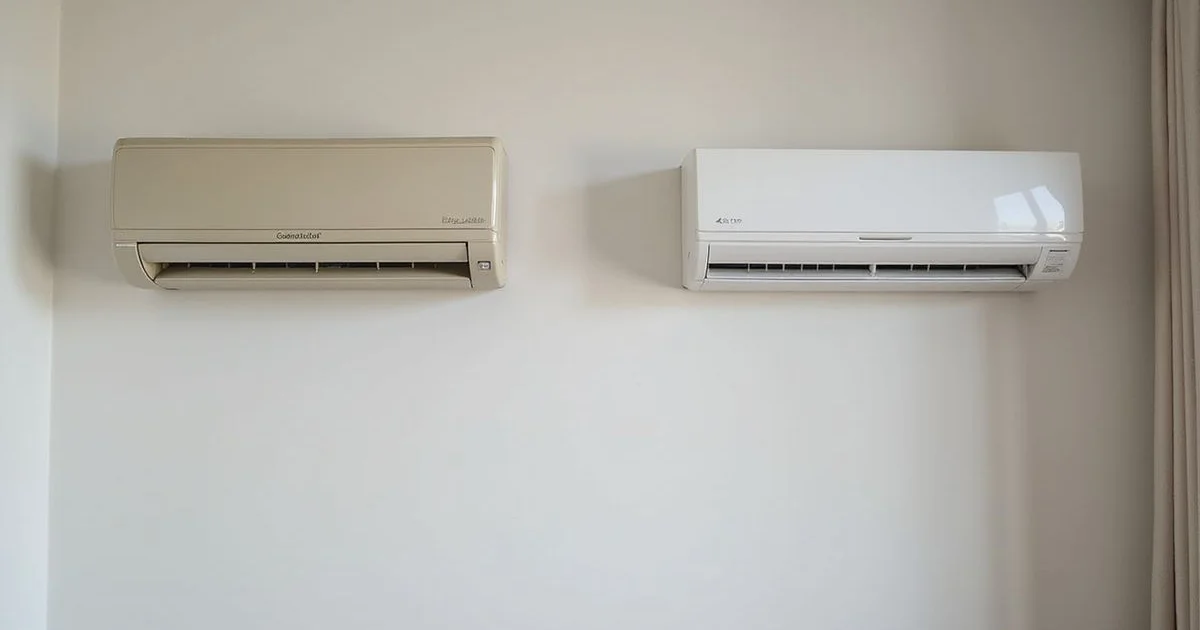
High TNB bills are one of the most common reasons homeowners in Ipoh ask us about a new aircond. Almost always, the conversation lands on the same question: inverter or non-inverter. The right choice depends entirely on how you use the unit, so let us break down the difference, the real savings, and the decision.
Understanding this is the first step to planning a sensible aircond installation.
The Difference Is the Compressor
The names sound technical, but the entire difference comes down to one part: the compressor.
A non-inverter aircond uses a fixed-speed compressor. It switches fully on when cooling is needed and fully off once the room hits the set temperature. Minutes later the room warms slightly and the compressor kicks back on at maximum capacity. Starting a heavy compressor from a dead stop pulls a power surge three to four times the normal running current, and that cycle repeats all day.
An inverter aircond uses a variable-speed compressor. It cools the room quickly, then slows to a gentle, steady hum to hold the temperature instead of stopping entirely. Premium models use twin rotary compressors for even smoother running.

The key difference
Starting a compressor from zero takes the most electricity. An inverter avoids frequent restarts by never fully stopping. That continuous, low-power running is where most of the saving comes from.
What You Save Each Month
The bigger your daily usage, the bigger the gap.
| Usage Pattern | Non-Inverter Monthly | Inverter Monthly | Typical Saving |
|---|---|---|---|
| Light, 2 to 3 hrs/day | Lower base cost | Slightly lower | Small |
| Moderate, 6 to 8 hrs/day | Medium | Noticeably lower | Moderate |
| Heavy, 10+ hrs/day | Higher | Substantially lower | Significant |
The Suruhanjaya Tenaga star rating makes this concrete. A 5-star inverter unit uses up to 40 percent less power per hour than a 1-star or 2-star non-inverter of the same horsepower. Stricter Minimum Energy Performance Standards introduced in 2026 mean a modern 5-star badge now guarantees serious efficiency.
In Ipoh, where the Kinta Valley heat keeps units running long hours, that hourly gap stacks up fast across a month.
Price and Payback
An inverter wall unit typically costs RM300 to RM700 more than a comparable fixed-speed model. A standard 1.5 HP non-inverter runs around RM1,400, while an efficient 1.5 HP inverter sits closer to RM1,780. The gap is similar across Panasonic, Mitsubishi Electric and Acson.
At moderate use of around eight hours a day, the payback period is generally two to four years. Every month after that break-even point is money back in your pocket.
Which One Suits You
The honest answer depends on your operating hours.
Choose an inverter if:
- You run the aircond six or more hours a day
- You sleep with the unit on overnight
- Long-term electricity cost matters to your household
- You want quiet running; premium inverters drop to around 21 decibels at low speed, against roughly 35 for standard units
A non-inverter may be fine if:
- The space is a guest room used only a few nights a month
- Your upfront budget is strict
- Daily use is very light, under two hours
One practical note: inverter units rely on an outdoor PCB that costs RM300 to RM450 to replace if a lightning surge damages it. Non-inverter systems are simpler and slightly cheaper to repair, which can matter for a rarely-used unit.
Before you buy, get the capacity right by reading what size aircond you need, and plan for regular aircond chemical wash so whichever unit you choose keeps running efficiently.
Aircon Service Pro Ipoh installs all major brands across the Kinta Valley. For an honest, data-backed opinion on the right unit for your home, ask for advice before you spend a cent.
Need a senior technician you can trust?
Fixed transparent pricing, a free gas top-up on every chemical wash and repair, and a 30-day workmanship warranty. We serve Ipoh and the wider Kinta Valley.