What Size Aircond (BTU) Do You Need for Your Room?
Pick the right aircond size for your room. A simple BTU and HP guide by room size, plus sun exposure and ceiling-height factors.
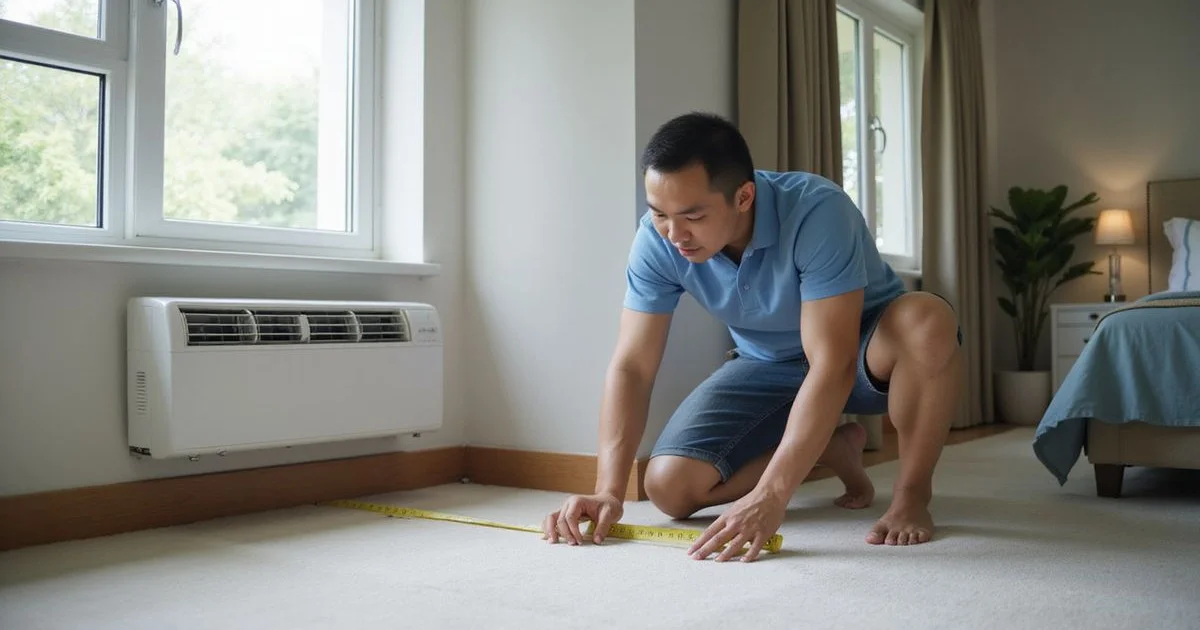
Buyers often pick an aircond off a quick store chart, then spend the next few years sweating through the afternoon. Room size is only the starting point. Real comfort comes from matching the unit to the actual heat load of the room, and in Ipoh, where afternoons regularly hit 33 degrees, that gap between rough and right is one you feel every day.
Getting it right before you spend a ringgit is the whole point of planning a proper aircond installation.
Start With Room Size
Horsepower is the practical unit here, and 1.0 HP roughly equals 9,000 BTU per hour. This baseline table is a reliable first read for typical homes.
| Room Size (sq ft) | Recommended Capacity |
|---|---|
| Up to 150 sq ft | 1.0 HP (9,000 BTU) |
| 150 to 250 sq ft | 1.5 HP (12,000 BTU) |
| 250 to 400 sq ft | 2.0 HP (18,000 BTU) |
| 400 to 600 sq ft | 2.5 HP (24,000 BTU) |
| Above 600 sq ft | Ceiling/cassette unit or multiple wall units |
Sizing tip
When you are between two sizes, choose the larger one if the room faces west or south, has a high ceiling, or is used heavily during the day. Going one HP step up is far cheaper than replacing an undersized unit that never cools properly.
The Quick Formula
For a sharper estimate, multiply your room area by a climate factor:
- Measure the room length and width to get the square footage
- Multiply by 60 BTU for standard shaded rooms
- Multiply by 80 BTU for sun-facing rooms that take the afternoon heat
A 150 sq ft bedroom facing the afternoon sun works out to about 12,000 BTU, which matches a 1.5 HP unit. The formula stops you buying on guesswork.
What Pushes the Number Up
The basic calculation gives a target. Your specific room then adjusts it.
Sun and Ceiling Height
A west-facing room with large glass windows absorbs serious heat and needs roughly a 10 percent BTU buffer. A heavily shaded north-facing room of the same size can need up to 20 percent less. Ceiling height matters too: a standard 3-metre ceiling fits the baseline, a 3.5-metre ceiling needs about 10 percent more, and double-volume ceilings need commercial-grade calculations.
People and Appliances
Every person in a room radiates heat all day. Add roughly 600 BTU for each regular occupant beyond the first two. Appliances add load as well: a kitchen with a running stove needs around 4,000 BTU extra, and large gaming computers, servers and entertainment systems all push the number up. Older Ipoh homes with poor roof insulation also let heat seep in faster, raising the daily load further.
Get It Wrong and Here Is What Happens
Sizing errors cost you comfort and money, and they fall into two camps.
Undersized. The compressor runs flat out and never reaches your set temperature. The room never feels properly cool, the strain wears the components, and the bill climbs. It is the single most common reason we see compressors fail early. If you want to understand how compressor type affects this, read the inverter vs non-inverter aircond comparison.
Oversized. The unit cools the room too fast and short-cycles, switching on and off before it can pull humidity out of the air. The room ends up cold but clammy, and the frequent stop-start wears the compressor. In Ipoh’s high humidity, an oversized unit leaving the air sticky is a genuinely uncomfortable result.
If your current unit shows these symptoms, a professional aircond repair check can tell whether the cause is sizing or a mechanical fault.
The correct size is the most important decision you make before installation. Premium features mean nothing if the baseline capacity is wrong. Request a site assessment and our senior technicians at Aircon Service Pro Ipoh will measure your room and confirm the exact capacity before you buy anything.
Need a senior technician you can trust?
Fixed transparent pricing, a free gas top-up on every chemical wash and repair, and a 30-day workmanship warranty. We serve Ipoh and the wider Kinta Valley.