The Fake Gas-Leak Scam: How to Spot a Dishonest Aircond Technician
Some technicians invent a gas leak to upsell. Learn how the fake gas-leak scam works, how to verify a real leak, and the red flags to watch.
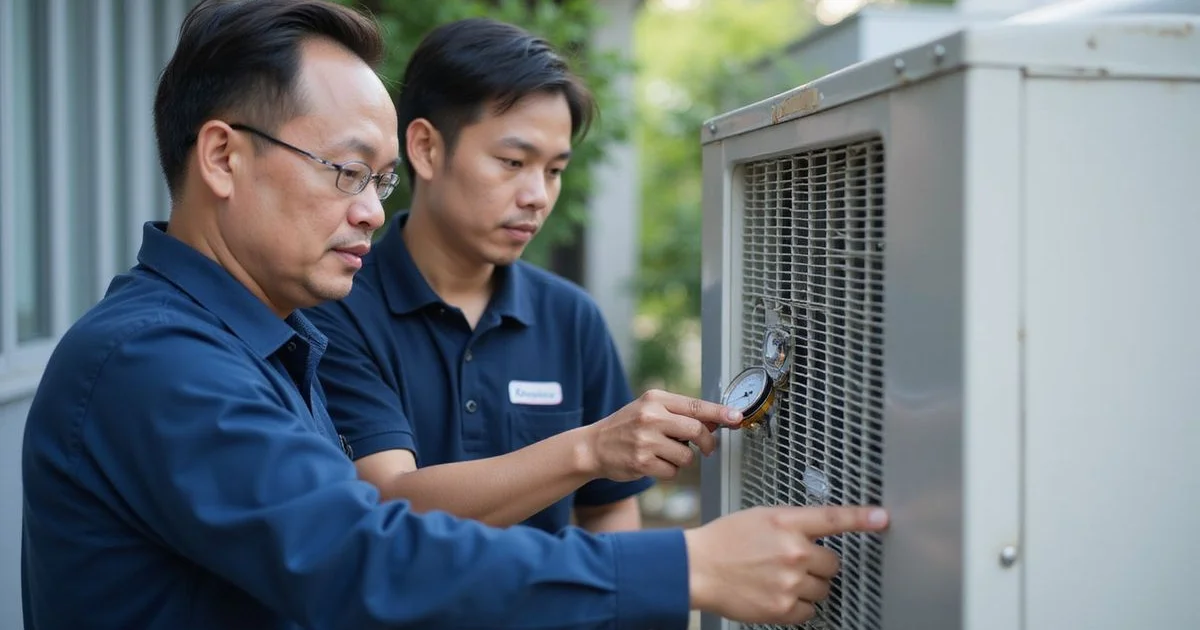
Ask around Ipoh and you will hear the same story more than once: a technician came for a routine clean, stepped outside for a minute, and came back announcing an expensive gas leak. Sometimes it is real. Often it is not. The fake gas-leak upsell is common because refrigerant is invisible, and most homeowners have no way to check the claim.
This guide shows you how the trick works and exactly how to verify a real leak, so a dishonest diagnosis cannot catch you out. For honest aircond repair in Ipoh, verified numbers always replace vague claims.
How the Fake Leak Upsell Plays Out
The script is predictable:
- A technician arrives for what was booked as a routine cleaning
- They glance at the indoor blower, then step outside
- A minute later they return, pointing vaguely at a copper pipe
- They quote a top-up several times higher than the original booking
You cannot see refrigerant escaping, so without a gauge the claim feels impossible to challenge. That is exactly the leverage the scam relies on.
It works because weak cooling genuinely can be caused by low refrigerant. But in day-to-day service, weak cooling far more often comes from a blocked evaporator coil, a tired run capacitor, or a filter that just needs washing. A leak should never be assumed without diagnostic tools.
Some operators go further. We have caught technicians quietly releasing gas from the service valve so their fake diagnosis looks real. You cannot detect that sabotage unless the pressure is checked before any work starts.
Real Leak vs Dirty Coil: Tell Them Apart
The symptoms point in different directions. Use this to sanity-check a leak claim.
| Real Gas-Leak Symptoms | Dirty-Coil Symptoms (No Leak) |
|---|---|
| Ice building up on the outdoor copper pipes | Weak airflow from the indoor blower |
| A hissing sound near the compressor valves | Water leaking from the indoor unit |
| The system runs non-stop but never cools | A musty smell when the unit starts |
| A low pressure reading on a manifold gauge | A normal pressure reading on a manifold gauge |
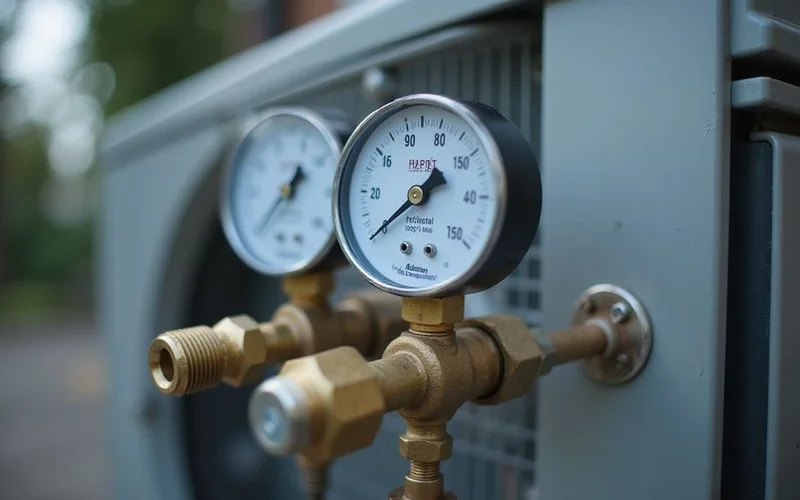
The test that proves it
A genuine leak is confirmed with a manifold gauge set attached to the service ports. The technician reads the pressure and can show you the exact number. If they refuse to show the gauge, the leak claim is unverified.
How a Genuine Leak Is Verified
A real diagnosis follows a strict process with no guesswork.
The pressure test. The technician connects a manifold gauge to the outdoor service ports. For a typical R32 unit, normal suction pressure sits around 115 to 140 PSI; an older R22 unit reads roughly 60 to 70 PSI. A reading inside the normal band means the charge is fine and the cooling fault lies elsewhere.
Locating the source. A low reading confirms gas has escaped, but not from where. The technician applies a thick soap solution to the brass fittings and joints, or uses an electronic leak detector that senses HFC refrigerant in the air. A repair is not recommended until the leak is visually confirmed. Common spots include loose flare nuts, pinhole corrosion in old copper, damaged U-bends in the coil, and poorly welded joints from a rushed install.
Sealing, not refilling. A proper repair welds or re-flares the damaged joint, pulls a deep vacuum, and only then recharges with fresh gas. A top-up with no repair just loses the gas again within weeks.
Why a Trustworthy Provider Has No Reason to Lie
The fix for this scam is choosing a provider whose pricing removes the incentive. At Aircon Service Pro Ipoh, a gas top-up of up to 10kg is included free with every chemical wash and major repair. If your unit is genuinely low, it is refilled at no extra cost. There is simply nothing to gain by inventing a leak.
What an honest provider gives you:
- A free diagnostic pressure check before any work begins
- The gauge reading shown to you directly
- A 1-month gas-leak warranty on every sealed copper repair
- No separate charge for R32 or R410A top-ups during a chemical wash
If a pressure test shows the system is charged correctly, we say so and move on to find the real fault. For the wider picture, read how to avoid aircond scams and the top-up vs leak repair comparison. If you suspect a fake diagnosis, book a diagnostic check for a verified second opinion.
Need a senior technician you can trust?
Fixed transparent pricing, a free gas top-up on every chemical wash and repair, and a 30-day workmanship warranty. We serve Ipoh and the wider Kinta Valley.